Base-Building and 4X Strategy Games: Planning for the Long Game
City builders and 4X strategy games unfold over weeks. How build queues, alliances and shields work, and how to progress without constant check-ins.

Base-building strategy games ask you to develop a town, city or empire over weeks or months. You collect resources, construct and upgrade buildings, train units, and often join alliances with other players. Some games focus on peaceful building; others, often called 4X games (explore, expand, exploit, exterminate), include large-scale battles between players.
These games are rewarding for patient planners, but their long timers and social pressure can also make them demanding. This guide explains the systems so you can play at a pace that suits you.
The build queue
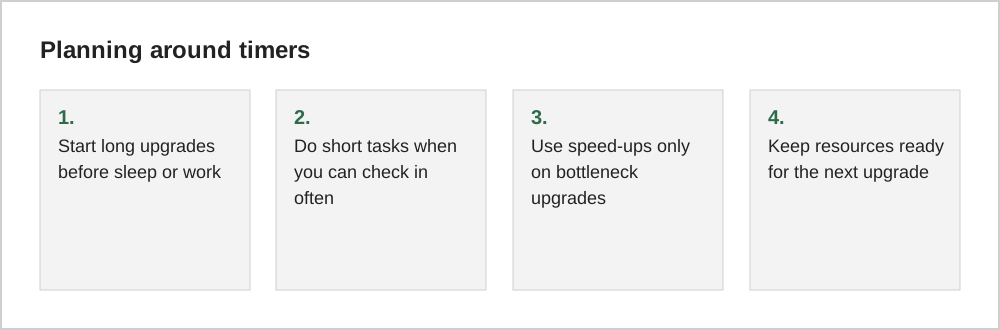
Most base builders limit how many things you can build or upgrade at once, and each upgrade takes time, from seconds early on to many hours later. Keeping your build queue busy is the single most important habit for steady progress.
Choosing what to upgrade
Many games have a central building, often a town hall or headquarters, whose level unlocks higher levels of everything else. Upgrading it too fast can leave the rest of your base weak, which matters in games where other players can attack you. A balanced approach is to bring key defensive and production buildings close to their maximum level before upgrading the central building again.
Resources and protection
In player-versus-player strategy games, stored resources can be raided. Common protections include storage buildings that keep some resources safe and "shields" that prevent attacks for a period of time.
| Habit | Why it helps |
|---|---|
| Spend resources before logging off | Less to lose in a raid |
| Use shields when away for long periods | Prevents attacks while you sleep or travel |
| Upgrade storage protection | Keeps a share of resources safe |
Alliances
Alliances, guilds or clans add cooperation: members can speed up each other's upgrades, share resources and fight together in events. A good alliance makes the game far more enjoyable. A demanding one can create pressure to play at specific times or to spend money.
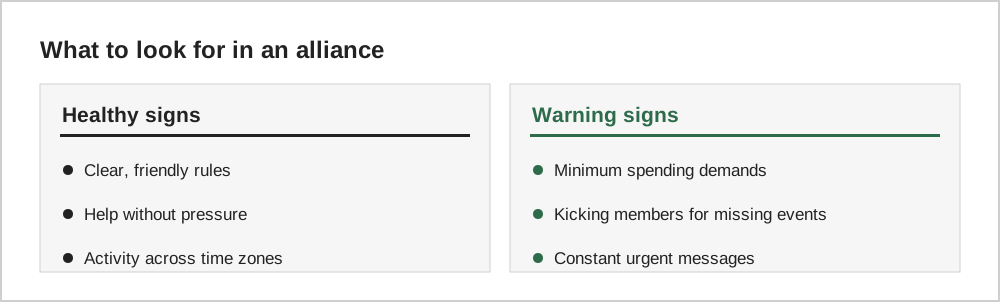
It is perfectly reasonable to leave an alliance that does not match the time you want to give the game.
Speed-ups and spending
Speed-ups skip timers and are one of the main things these games sell. They can also be earned through events and daily tasks. Saving free speed-ups for upgrades that block other progress is far more effective than using them as soon as you get them. Our guide on energy and timers explains the general idea.
Strategy games often have the highest spending ceilings in mobile gaming, because a stronger base or army matters in competition with other players. Setting a firm budget before you start is especially important here; see setting a game budget.
A sample first week
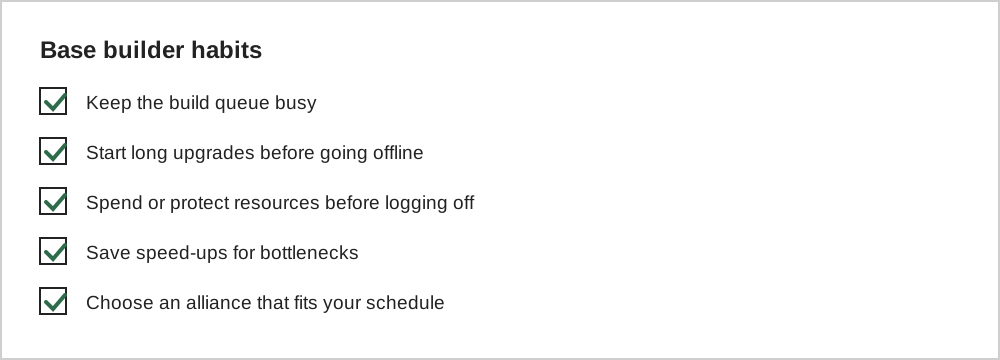
In the first days, follow the tutorial quests closely; they usually guide you to upgrade the buildings that matter most. Keep your builders or construction queues busy at all times, starting longer upgrades before you sleep. Upgrade resource production early, since it pays back over the whole game.
By the end of the first week, join an active alliance, which often provides help that shortens construction times. Avoid attacking stronger players until your defences and troops can handle retaliation; many games reward patient growth more than early aggression.
Recognising pay-to-win pressure
Base-building games often become harder to progress in without spending after the early stages. Signs include very long upgrade times, frequent offers for speed-ups and alliance events where top rewards go mainly to big spenders. If progress starts to feel like waiting for days at a time, it is a good moment to decide how much you are willing to spend, or whether the game still suits you.
Common questions
Can I play a base builder casually?
Yes, especially if you choose games without heavy player-versus-player pressure or join a relaxed alliance. Starting long upgrades before going offline and keeping shields active when available makes casual play much easier.
Is it worth joining an alliance early?
Usually yes. Alliances often speed up construction and give access to group rewards. Choose one whose activity level matches yours, and do not hesitate to move if expectations do not fit.
The short version
Base builders reward planning around timers rather than constant play. Keep your queue busy, start long upgrades before you go offline, protect your resources, and pick an alliance that respects your time. Set a budget early, because competitive strategy games can absorb a lot of money.